
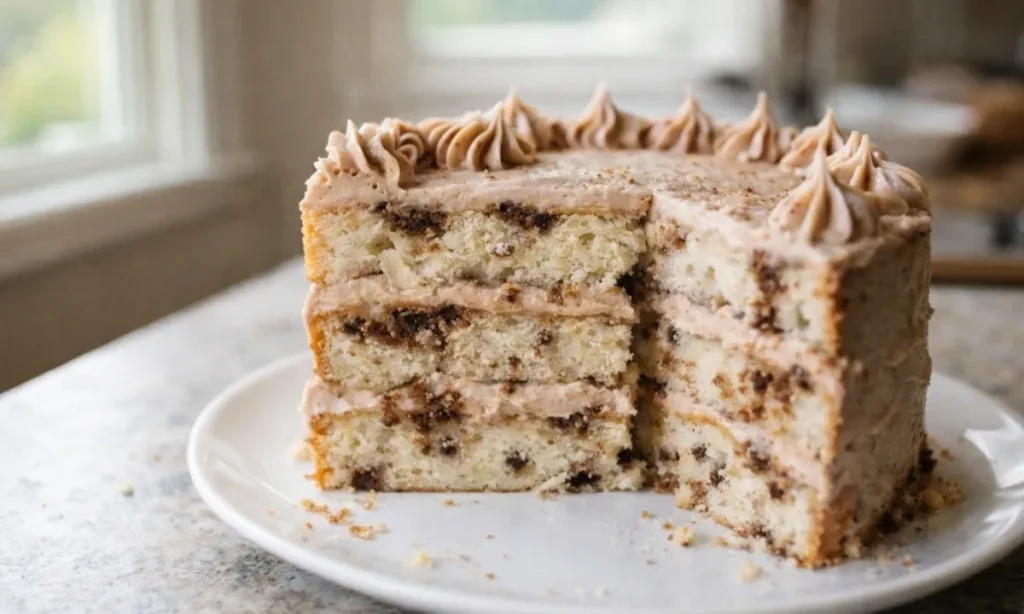
This snickerdoodle cake brings the warm, comforting spice of the classic cookie into a three-layer dessert. Soft cake layers are studded with a cinnamon-brown sugar swirl, then frosted with a rich brown sugar cinnamon buttercream. The result is a cake that tastes like your favorite snickerdoodle cookie but with a tender, moist crumb that melts on your tongue.
The recipe uses a combination of whole eggs and egg whites to create a lighter, more delicate texture while keeping the cake moist. Buttermilk adds tang and helps activate the leavening agents, giving you a cake that rises evenly and stays tender even after a few days.
Why This Cake Works So Well
The secret to this snickerdoodle cake lies in the balance of ingredients. Cake flour creates a tender crumb that won’t feel dense or heavy. The butter and sugar are creamed together thoroughly, which incorporates air and helps the cake rise. Using both whole eggs and egg whites adds structure without making the cake tough, while the buttermilk keeps everything moist.
The cinnamon swirl is dropped onto the batter before baking, so some pieces stay chunky and others blend into the layers. This creates pockets of concentrated cinnamon flavor throughout the cake. The brown sugar cinnamon buttercream frosting ties everything together with its deep, molasses-forward taste that complements the spiced cake perfectly.
How to Get Clean, Even Cake Layers
Dividing the batter evenly among three 9-inch pans is important for even baking. If you have a kitchen scale, weigh each pan of batter to ensure they’re exactly the same. This prevents one layer from baking faster than the others and helps you stack a level cake.
After baking and cooling completely, use a large serrated knife to slice off the domed tops. A gentle sawing motion works better than pressing down, which can compress the cake. Some bakers prefer to use a cake leveler for precision, but a good serrated knife works just fine.
Building and Frosting the Cake
Let the frosting set between layers by spreading about 1.5 cups on each layer before adding the next one. The crumb coat technique—a thin first layer of frosting—seals in crumbs and creates a smooth base for the final frosting. Chilling the crumb coat for at least 30 minutes helps it set firm, making the final frosting layer look polished.
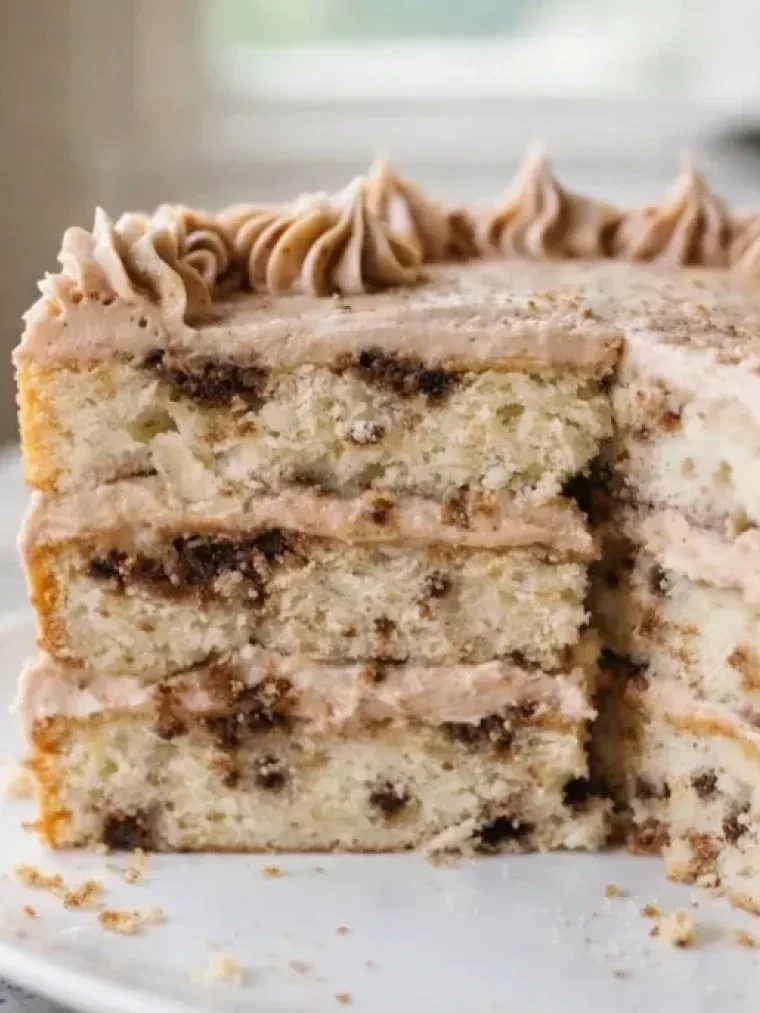
If you want a semi-naked style cake like the original, spread the crumb coat thinly around the sides and top, then add a thicker layer on top only. An offset spatula and bench scraper are helpful tools, but even a regular butter knife will work. Pipe frosting around the edges if desired, or keep it simple with a smooth finish.
Adjusting the Frosting Consistency
Frosting texture matters. If your frosting seems too thick after mixing, add heavy cream or milk one tablespoon at a time until it reaches a spreadable consistency. If it’s too thin, add more confectioners’ sugar in quarter-cup increments. Room temperature ingredients mix more smoothly, so make sure your butter and cream cheese aren’t cold.
Taste as you go. The frosting can handle more cinnamon or vanilla extract if you want bolder flavor. A tiny pinch of salt balances sweetness and brings out the cinnamon notes. Start with the recipe’s amount and adjust to your preference.
Timing and Cooling
The total time includes cooling, which is crucial. Don’t rush this step. Warm cake is fragile and will crumble when you try to frost it. Let the cakes cool completely in their pans on a wire rack, then turn them out onto the rack to cool further before frosting. This usually takes 1 to 2 hours depending on your kitchen temperature.
Refrigerating the assembled cake for 30 to 60 minutes before slicing helps the layers hold together when you cut. Cold frosting firms up, making clean slices possible. A long, thin knife dipped in hot water and wiped clean between cuts also helps.
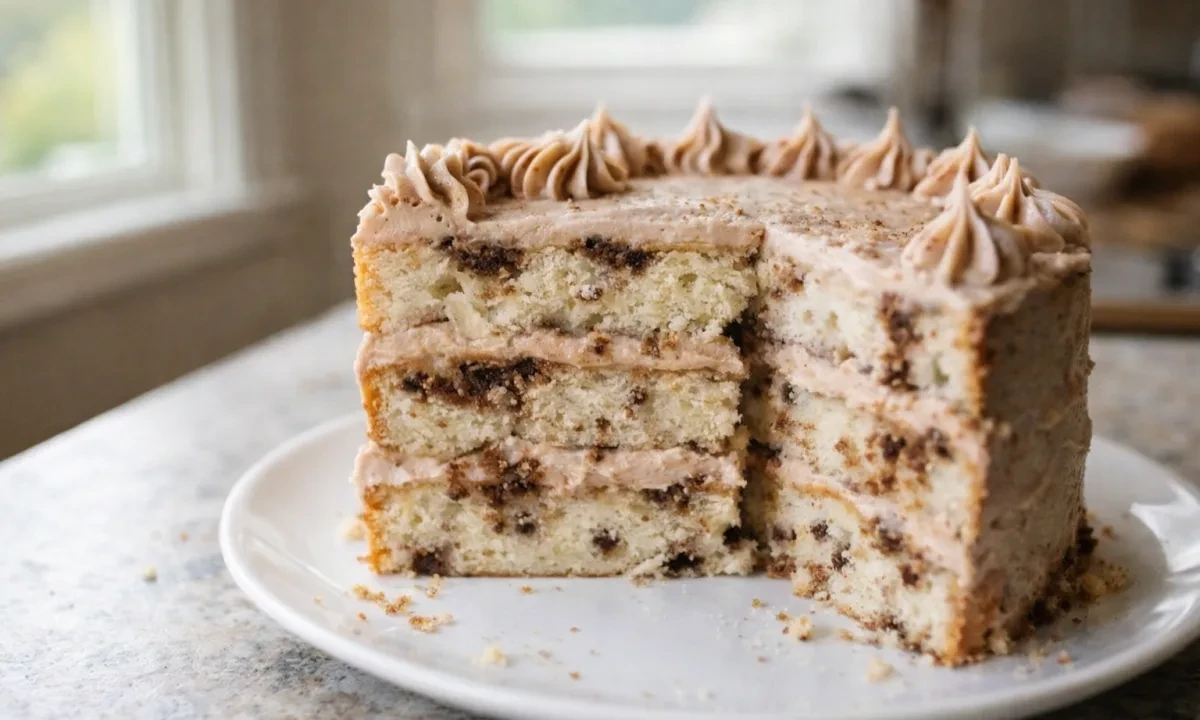
Snickerdoodle Cake
A three-layer snickerdoodle cake with cinnamon swirl and brown sugar cinnamon buttercream frosting. Tender, moist cake layers with bold cinnamon flavor throughout.
14
servings50
minutes25
minutesIngredients
3 and 2/3 cups (433g) cake flour, spooned and leveled
1 tsp salt
2 tsp baking powder
3/4 tsp baking soda
1 and 1/2 cups (340g) unsalted butter, softened to room temperature
1 and 2/3 cups (330g) granulated sugar
3 large eggs plus 2 additional egg whites, at room temperature
1 tbsp pure vanilla extract
1 and 1/2 cups (360ml) buttermilk, at room temperature
1/2 cup (100g) packed light or dark brown sugar
1/3 cup all-purpose flour (41g) or cake flour (38g), spooned and leveled
1 tbsp ground cinnamon
1/4 cup (56g) unsalted butter, melted
1 and 1/4 cups (282g) unsalted butter, softened to room temperature
8 oz (226g) full-fat brick cream cheese, room temperature and sliced into 4 pieces
3/4 cup (150g) packed light or dark brown sugar
5 and 1/2 cups (660g) confectioners’ sugar
1/4 cup (60ml) heavy cream or whole milk
1 tsp pure vanilla extract
1/8 tsp salt, plus more as needed
Snickerdoodle cookies for garnish, optional
Directions
- Preheat oven to 350°F (177°C). Grease three 9-inch cake pans, line with parchment paper rounds, then grease the parchment paper.
- Whisk together the cake flour, salt, baking powder, and baking soda. Set aside.
- Using a handheld or stand mixer fitted with a paddle or whisk attachment, beat the butter and granulated sugar on high speed until smooth and creamy, about 3 minutes. Scrape down the bowl as needed.
- Beat in the 3 eggs, 2 egg whites, and 1 Tablespoon vanilla extract on high speed until combined, about 2 minutes. Scrape down the bowl as needed.
- With the mixer on low speed, slowly add the dry ingredients. With the mixer still on low speed, slowly pour in the buttermilk and mix just until combined. Whisk by hand if needed to remove any lumps.
- Pour batter evenly into the prepared cake pans. Weigh them with a kitchen scale if desired to ensure equal distribution.
- Make the cinnamon swirl: Mix the brown sugar, flour, and cinnamon together with a fork. Pour the melted butter on top and mix until combined. Use immediately.
- Drop small spoonfuls of the cinnamon swirl onto each unbaked cake. Use a knife to gently swirl the spoonfuls into the batter.
- Bake for 23 to 26 minutes or until a toothpick inserted in the center comes out clean. Allow cakes to cool completely in the pans on a wire rack.
- Make the frosting: Beat the softened butter on medium speed until creamy, about 2 minutes. Add the cream cheese one piece at a time on medium-high speed, mixing until each piece is combined before adding the next.
- Add the brown sugar and beat on medium-high speed until combined, about 1 minute.
- Add the cinnamon, confectioners’ sugar, heavy cream, vanilla extract, and salt. Beat on low speed for 30 seconds, then on medium-high speed until completely combined and creamy. Adjust consistency with more confectioners’ sugar or heavy cream as needed.
- Using a large serrated knife, slice the domes off the cooled cakes to create flat surfaces.
- Place the first cake layer on a cake stand or serving plate. Spread about 1 and 1/2 cups of frosting on top. Top with the second cake layer and spread another 1 and 1/2 cups of frosting on top. Top with the third cake layer.
- Spread a thin crumb coat of frosting around the sides and top of the cake. Chill uncovered in the refrigerator or freezer for at least 30 minutes.
- Spread additional frosting on top and pipe frosting around the edges if desired. Garnish with snickerdoodles if desired.
- Refrigerate the cake for at least 30 to 60 minutes before slicing and serving.
Frequently Asked Questions
Can I make this cake in two layers instead of three?
Yes. Divide the batter between two 9-inch pans and bake for 20 to 23 minutes. You’ll have two thick layers instead of three thinner ones. Adjust the frosting amount accordingly, using about 2 cups between the layers and the rest on top.
What if I don't have buttermilk?
Make a substitute by mixing 1.5 cups whole milk with 1 Tablespoon lemon juice or white vinegar. Let it sit for 5 minutes before using. This will give you the acidity and tang that buttermilk provides.
Can I use all-purpose flour instead of cake flour?
All-purpose flour has more protein than cake flour, which can make the cake slightly denser and tougher. If you must use it, reduce the amount slightly (about 3 and 1/3 cups) to compensate. Cake flour is recommended for the best texture.
How do I know when the cake is done baking?
Insert a toothpick into the center of one of the cakes. If it comes out clean or with just a few moist crumbs, the cake is done. If batter clings to the toothpick, bake for another minute or two and check again.
Why is my frosting too thin or too thick?
If it’s too thin, add more confectioners’ sugar one quarter-cup at a time. If it’s too thick, add heavy cream or milk one tablespoon at a time. Make sure your butter and cream cheese are at room temperature, as cold ingredients can affect the frosting’s consistency.
Can I make this cake ahead of time?
Yes. Bake and cool the cake layers up to 2 days ahead, then wrap them tightly and store at room temperature. You can also freeze unfrosted layers for up to 3 months. Frost the cake on the day you plan to serve it for the best texture and appearance.
Is there a way to make this cake less sweet?
You can reduce the granulated sugar in the cake by up to one-quarter cup if you prefer a less sweet cake. For the frosting, use a pinch more salt to balance the sweetness, or reduce the confectioners’ sugar slightly. Taste as you adjust.







Leave a Reply