
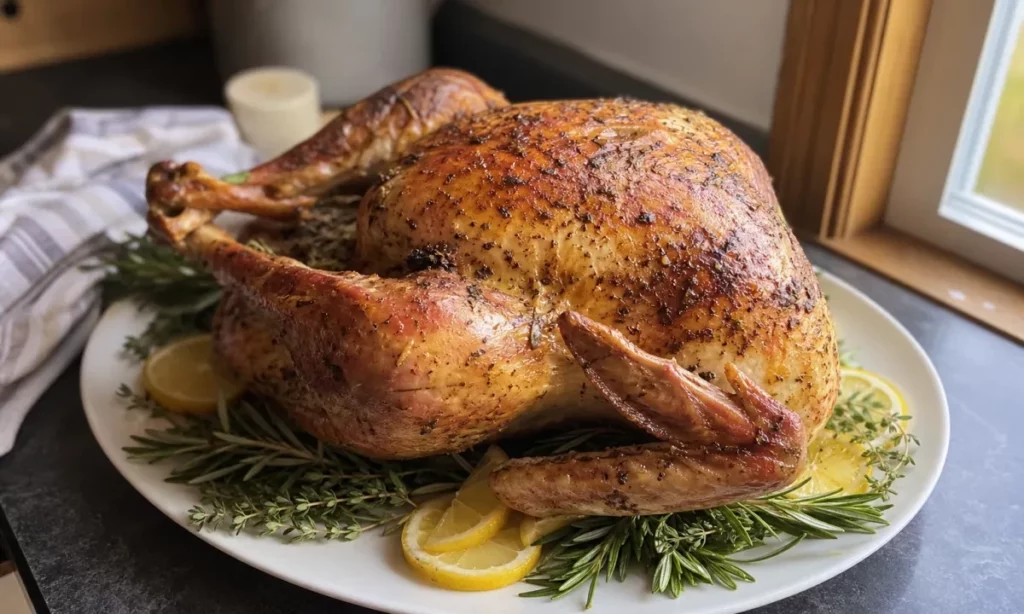
If you love this thanksgiving turkey turns, this one is a keeper. Thanksgiving turkey doesn’t have to be stressful. This straightforward approach skips the complicated steps and focuses on what actually matters: a bird that stays moist, tastes incredible, and comes together without drama. The secret is herb butter under the skin, proper timing, and one important resting period. You’ll have a centerpiece dinner guests actually look forward to.
Why This Method Works So Well
The key to a tender, flavorful turkey lies in three things: getting the temperature right, keeping the meat moist, and letting the bird rest. This recipe uses room-temperature butter mixed with fresh herbs and garlic, which you work under the skin before roasting. This adds flavor directly to the meat while the butter keeps it from drying out during cooking. The low oven temperature (325°F) and moderate cooking time give the bird time to cook through without the outside turning tough or burnt.
Most home cooks either undercook turkey or leave it in too long. This method uses a simple thermometer check to nail the right temperature without guesswork. The turkey finishes at 158°-160°F in the oven, then continues cooking as it rests, reaching the safe 165°F by the time you carve it.
For another idea to try next, see ahead stuffing that.
What You’ll Need
Gather these ingredients before you start:
- One 12 to 18 pound fully thawed turkey
- ¾ cup unsalted butter (softened to room temperature)
- 6 cloves garlic, minced
- Fresh rosemary, thyme, and sage (1 to 2 sprigs each)
- 1 onion, quartered
- 1 lemon, quartered
- 3 celery ribs, roughly chopped
- 2 carrots, roughly chopped
- Kosher salt and black pepper
You’ll also need a roasting pan with a rack (or you can roast the turkey on a bed of chopped vegetables), a meat thermometer, and paper towels.
Looking for more? Don’t miss our crock pot maple.
How to Make This Thanksgiving Turkey Turns
Step 1: Bring the turkey to room temperature. Remove the turkey from the refrigerator about 1 hour before roasting. This helps it cook more evenly. While it’s warming up, remove the giblets from the cavity and pat the bird dry with paper towels. Moisture on the skin prevents browning.
Step 2: Preheat and prepare the cavity. Set your oven to 325°F. Season the inside of the turkey generously with salt and pepper. Stuff the cavity with the quartered onion, lemon, and fresh herb sprigs. These aromatics will infuse the meat as it cooks.
If you enjoy this, you’ll love our chicken alfredo casserole.
Step 3: Make the herb butter. In a small bowl, combine the softened butter, minced garlic, 1 tablespoon each of finely chopped rosemary and thyme, 1 teaspoon salt, and ½ teaspoon pepper. Stir until everything is evenly mixed. This is your flavor base.
More from the kitchen: slow cooker beef.
Step 4: Apply the herb butter. Gently slide your fingers under the skin of the turkey to loosen it, working from the neck area down toward the thighs. Rub about one-third of the herb butter between the skin and the breast meat. Spread the remaining butter all over the outside of the turkey, getting into every crevice. Tuck the wing tips under the body to prevent them from burning.
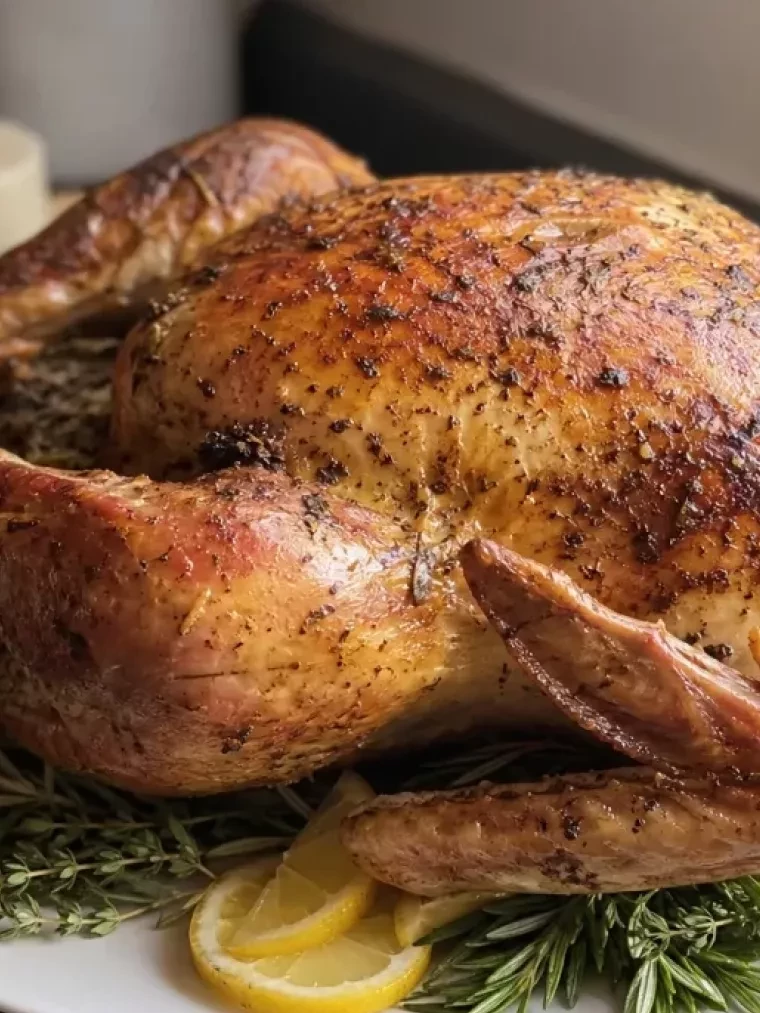
Step 5: Set up the roasting pan. Place the turkey on a roasting rack, or create a bed of the chopped vegetables (onion, celery, and carrots) in the bottom of the pan and set the turkey on top. The vegetables create a natural rack and add flavor to the pan drippings for gravy.
It pairs beautifully with chicken caesar salad.
Step 6: Roast the turkey. Place the turkey in the oven and roast for approximately 15 minutes per pound. For a 14-pound turkey, that’s about 3.5 hours. You don’t need to baste, but do check the bird after it’s about 75% done. If the skin is browning too quickly, loosely tent it with aluminum foil. Use a meat thermometer to check the thickest part of the thigh or breast. The turkey is ready when it reaches 158°-160°F. According to food safety guidelines, poultry reaches safe temperature at 165°F, which will happen during the resting period.
Step 7: Rest before carving. Remove the turkey from the oven and let it rest for 30 minutes, covered loosely with foil to keep it warm. This resting period is crucial—it allows the juices to redistribute throughout the meat, making every bite tender and moist. If you skip this step, the juices run out when you cut into the bird.
For another idea to try next, see chicken fajita tortilla.
Step 8: Carve and serve. Transfer the turkey to a carving board and slice. Reserve the pan drippings to make gravy.
Looking for more? Don’t miss our sweet potato casserole.
Small Tips That Make a Big Difference
- Don’t skip the room-temperature step. A cold turkey takes much longer to cook and may dry out before the center reaches temperature. One hour on the counter is enough.
- Use a reliable meat thermometer. Instant-read thermometers are inexpensive and eliminate the guesswork. Check the thickest part of the thigh, away from bone.
- Pat the skin completely dry. Moisture prevents browning. Spend an extra minute on this step for better color.
- Don’t overstuff the cavity. Stuffing that’s too tightly packed won’t heat through properly. Leave some space for air to circulate.
- Cover loosely if browning too fast. Aluminum foil placed loosely over the bird (not sealed) slows browning without steaming the skin.
- Save every drop of pan liquid. The browned bits and juices in the roasting pan are liquid gold for gravy. Scrape them up and use them.
Serving Ideas and Pairing Suggestions
Serve the carved turkey on a large platter surrounded by fresh herbs for a beautiful presentation. Pair it with traditional sides like mashed potatoes, stuffing, cranberry sauce, and roasted vegetables. The herb butter flavor works especially well alongside rich gravies and tart cranberry preparations. A simple pan gravy made from the roasting drippings ties everything together.
How to Store Leftovers Without Wasting Them
Let the turkey cool completely before storing. Remove all meat from the bones and place it in airtight containers. Properly stored turkey keeps in the refrigerator for 3 to 4 days. You can also freeze it for up to 3 months. Don’t leave the turkey sitting at room temperature for more than 2 hours.
If you enjoy this, you’ll love our leftover spaghetti casserole.
Reheating Without Drying It Out
The best way to reheat turkey is gently and with moisture. Slice the leftover meat and layer it in a baking dish with a little broth or gravy. Cover with foil and warm in a 325°F oven for about 15 minutes, until heated through. Avoid the microwave, which can make the meat tough and rubbery. Alternatively, shred the meat and use it in turkey soup, sandwiches, or salads where the moisture from other ingredients keeps it tender.
Common Mistakes That Lead to Dry Turkey
- Cooking at too high a temperature. This browns the outside before the inside is done. Stick with 325°F.
- Skipping the resting period. Cutting into the turkey immediately releases all the juices. Rest for 30 minutes minimum.
- Overcooking the bird. Once the thigh reaches 160°F, remove it from the oven. Residual heat will bring it to 165°F during rest.
- Not using a thermometer. Guessing by time alone often leads to either undercooked or overdone turkey.
- Stuffing the cavity too tightly. This traps steam and can prevent even cooking.
- Cooking a frozen turkey. Make sure it’s completely thawed before roasting. A partially frozen bird cooks unevenly.
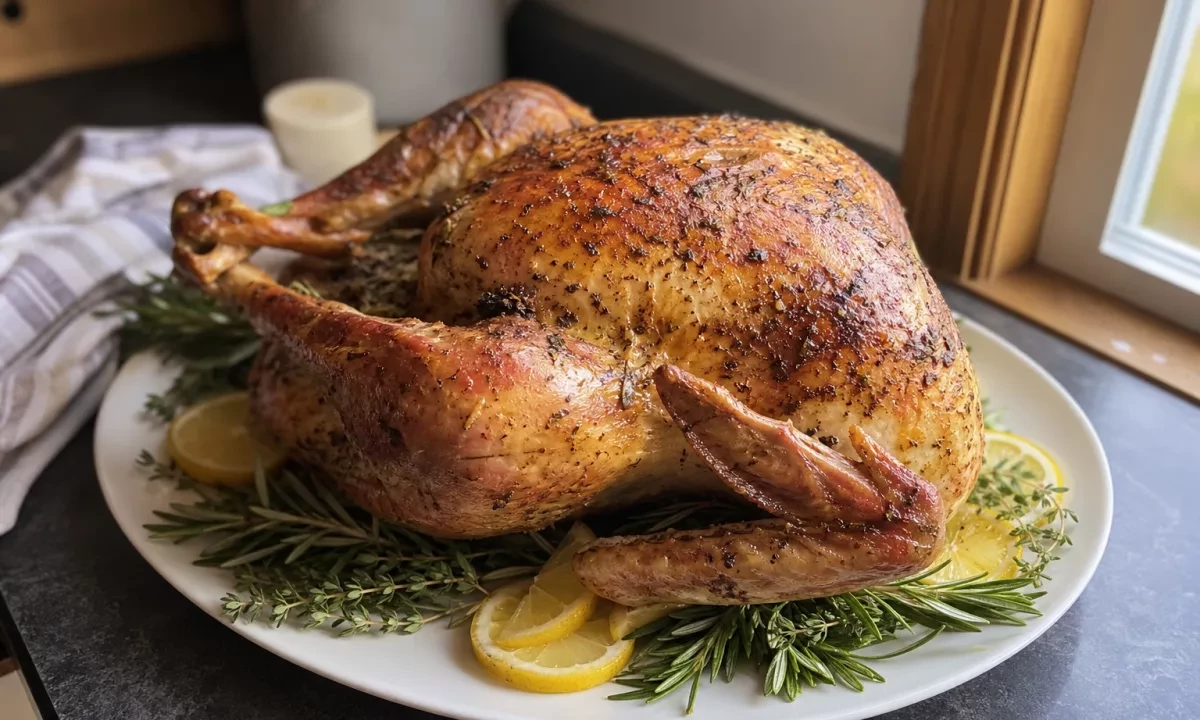
Easy Thanksgiving Turkey (Best No-Fail Recipe)
A foolproof method for roasting a juicy, flavorful turkey using herb butter, proper timing, and a simple thermometer check. Feeds 14 people with minimal stress.
14
servings30
minutes3
hours30
minutesIngredients
12 to 18 pound turkey (*see notes below about using a larger turkey) (fully thawed)
1 onion (peeled and quartered)
1 lemon (quartered)
1 to 2 sprigs fresh rosemary
1 to 2 sprigs fresh thyme
1 to 2 sprigs fresh sage
kosher salt and black pepper
¾ cup unsalted butter (room temperature)
6 cloves garlic (minced)
1 teaspoon kosher salt
½ teaspoon black pepper
1 tablespoon finely chopped fresh rosemary
1 tablespoon finely chopped fresh thyme
1 onion (peeled and quartered)
3 celery ribs (roughly chopped)
2 carrots (roughly chopped)
Directions
- Bring the turkey to room temperature. Allow your turkey to come to room temperature by removing it from the fridge 1 hour before roasting. Then, remove the giblets.
- Fill the cavity. Preheat your oven to 325°F (160°C) and pat the outside of the turkey dry with paper towels. Season the cavity of the turkey with salt and pepper. Then fill it with the onion, lemon, and fresh herbs. If your turkey is smaller, don't overfill the cavity as you do want some airflow.
- Make the herb butter mixture. In a small bowl, make the herb butter by stirring the softened butter, garlic, salt, pepper, rosemary and thyme together.
- Rub the herb butter all over. Loosen the skin of the turkey gently by sliding your fingers underneath. Then rub about ⅓ of the herb butter between the skin and turkey breasts. Rub the remaining herb butter all over the entire outside of the turkey.
- Place on a roasting rack. Place the turkey on a roasting rack or on top of a bed of chopped vegetables (if you don't have a rack), or both! Tuck the wing tips under the turkey to prevent them from burning.
- Cook the turkey. Place the turkey in the oven and roast for about 15 minutes per pound, or until the internal temperature reaches 158°-160°F. You don't need to baste the turkey, but do keep an eye on it after it's about 75% done. If you notice the skin browning too quickly, you can place aluminum foil on top. To verify the temperature, place a thermometer into the meatiest part of the thigh or breast. The turkey will continue to cook once it's removed from the oven and will rise in temperature to 165°F, after it's rested.
- Let it rest. Let the turkey to rest for 30 minutes before carving. This allows the juices to redistribute, making for a deliciously juicy turkey. To keep the turkey warm, you can cover the turkey with aluminum foil on the counter.
- Carve and serve. The last step is to carve the turkey and serve it up on a platter. Make sure to follow my tips on how to carve a turkey. And don't forget to save the juices from the pan to make turkey gravy!
Frequently Asked Questions
Can I use a larger turkey with this recipe?
Yes, adjust the cooking time by adding approximately 15 minutes per additional pound beyond 14 pounds. A 20-pound turkey will need about 4.5 to 5 hours total. Always verify doneness with a meat thermometer rather than relying on time alone.
Do I need to baste the turkey during cooking?
No. Basting is unnecessary and doesn’t improve moisture. The herb butter under the skin provides all the flavor and moisture protection the turkey needs. Skip basting and save yourself the effort.
What if my turkey is still frozen the day before Thanksgiving?
Thaw it in the refrigerator, allowing about 24 hours for every 4 to 5 pounds. A 16-pound turkey needs 3 to 4 days to thaw safely. For faster thawing, use the cold-water method: submerge the turkey in its original packaging in cold water, changing the water every 30 minutes. This takes 2 to 3 hours.
Can I make the herb butter ahead of time?
Absolutely. Mix the herb butter the day before and store it in the refrigerator. Let it soften slightly at room temperature before rubbing it on the turkey so it spreads more easily.
What temperature should the turkey reach for food safety?
The turkey is safe to eat when the thickest part of the thigh reaches 165°F. In this recipe, you remove it from the oven at 158°-160°F because it continues cooking during the 30-minute rest period, reaching the safe 165°F by carving time.
How can I tell if the turkey is done without a thermometer?
Use a meat thermometer. There’s no reliable way to judge doneness by appearance or feel alone. A meat thermometer is inexpensive and eliminates the risk of undercooking or overcooking.
Can I prep the turkey the night before?
Yes. You can apply the herb butter and stuff the cavity the night before, then cover and refrigerate. Remove it from the fridge about 1 hour before roasting to bring it closer to room temperature for even cooking.
Why is the resting period so important?
During the 30-minute rest, the residual heat continues cooking the turkey to 165°F, and the juices redistribute throughout the meat. Skipping this step causes all the juices to run out when you cut into the bird, leaving dry meat.





Leave a Reply