
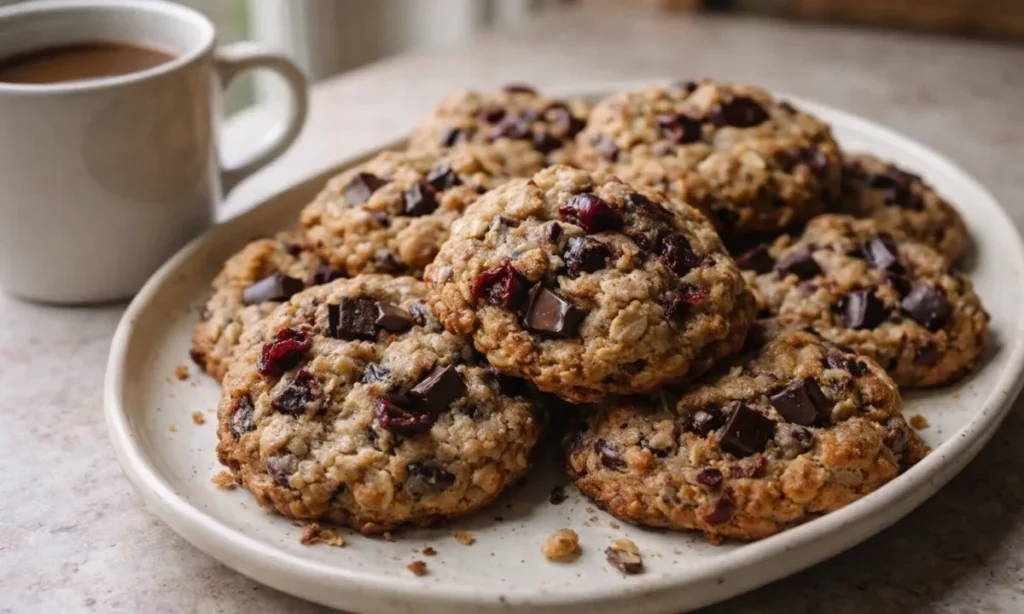
These big fat dark chocolate cranberry oatmeal cookies deliver exactly what their name promises—oversized, chewy rounds packed with bittersweet chocolate, tart-sweet cranberries, and toasted walnuts. The dough uses both all-purpose and cake flour for a tender crumb, while molasses and brown sugar create depth and chewiness. A two-temperature baking method ensures the edges set while the centers stay soft and slightly underbaked.
The recipe makes 16 to 18 large cookies, and the dough can be refrigerated for up to 4 days, making it ideal for baking fresh batches throughout the week.
Why This Recipe Works
The combination of flours matters here. All-purpose flour provides structure, while cake flour—with its lower protein content—keeps the cookies tender rather than tough. Cornstarch further softens the crumb by interfering with gluten development. Brown sugar and molasses contribute moisture and a subtle caramel flavor that balances the tartness of the cranberries.
The two-stage baking technique is the secret to proper texture. Starting at 400°F (204°C) for 5 minutes sets the edges quickly. Lowering the temperature to 350°F (177°C) for the final 10 minutes allows the centers to cook through without overbaking. This prevents the cookies from spreading too thin or becoming hard.
Building the Dough
Begin by whisking together the dry ingredients—oats, flours, cornstarch, baking powder, baking soda, cinnamon, and salt. This ensures the leavening agents and spices are evenly distributed. Set this mixture aside.
Cream the softened butter with both brown and granulated sugar for about 3 minutes on medium-high speed until the mixture is light and fluffy. This step incorporates air into the dough, which helps the cookies rise slightly during baking. Add the eggs, molasses, and vanilla, then beat on high speed for 1 minute until fully combined. The molasses will darken the batter slightly and add richness.
Fold in the dry mixture on low speed, then add the chopped chocolate, cranberries, and walnuts. The dough will be thick and sticky—this is normal. Mix just until everything is evenly distributed, being careful not to overmix.
Chilling and Shaping
Refrigerate the dough for at least 1 hour. This resting period allows the flour to fully hydrate and helps the dough firm up, making it easier to scoop into uniform portions. If you chill the dough longer than 1 day, let it sit at room temperature for 30 minutes before scooping so it’s workable.
Use a 1/3-cup measuring cup to portion the dough—each scoop will weigh about 3 ounces (85g). Arrange 5 to 6 cookies per baking sheet, leaving space between them for gentle spreading.
Baking for the Perfect Texture
The two-temperature method is crucial. Bake at 400°F (204°C) for 5 minutes without opening the oven door. This initial high heat sets the edges and helps the cookies develop structure. Then reduce the temperature to 350°F (177°C) and bake for 10 more minutes. The cookies should look slightly underbaked in the very center when you remove them—they’ll continue cooking on the hot baking sheet as they cool.
Allow the cookies to rest on the baking sheet for 10 to 20 minutes before transferring to a wire rack. This cooling period lets them firm up enough to move without breaking apart while still maintaining a chewy interior.
Storage and Keeping
Once fully cooled, store the cookies in an airtight container at room temperature for up to 1 week. They actually improve slightly after a day or two as the flavors meld and the texture becomes more uniform throughout.
For longer storage, freeze the baked cookies in a freezer-safe container for up to 3 months. Thaw at room temperature for about 1 hour before serving. You can also freeze the portioned dough on a baking sheet, then transfer the frozen scoops to a freezer bag. Bake from frozen, adding 2 to 3 minutes to the total baking time.
Common Baking Mistakes to Avoid
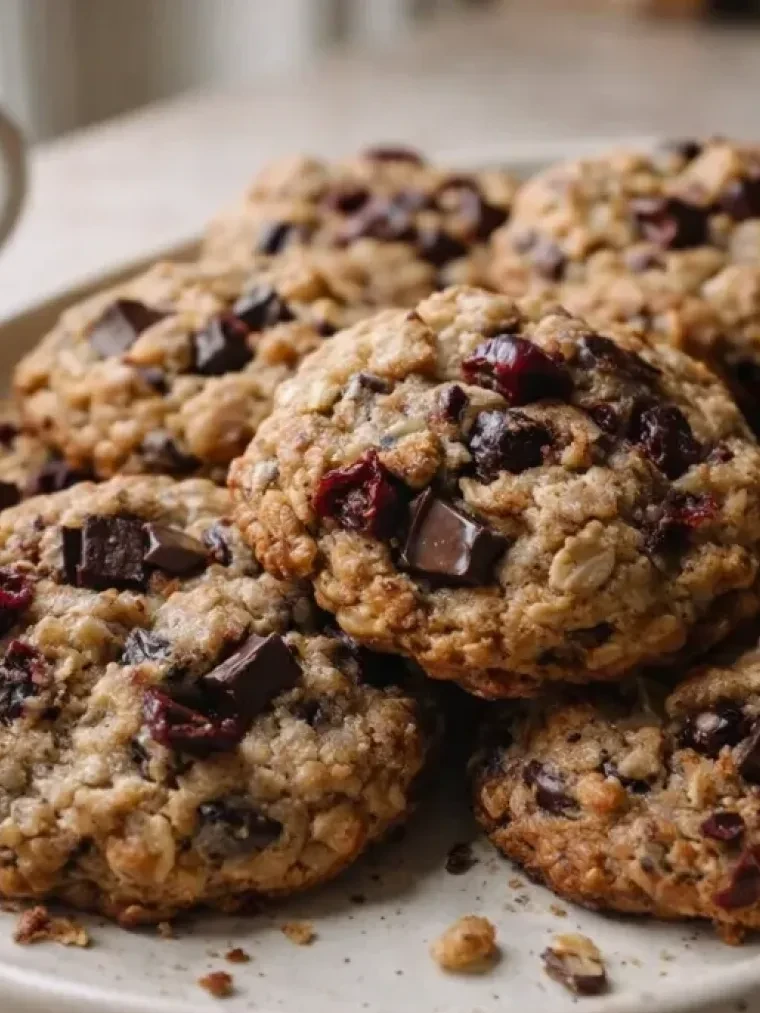
Overbaking is the most common issue. Even 2 extra minutes can transform chewy cookies into crispy ones. Watch for the edges to be set and golden while the center still looks slightly soft. The cookies will finish cooking on the baking sheet.
Using cold dough straight from the refrigerator can cause uneven baking. If chilled longer than 1 day, bring the dough to room temperature for 30 minutes so it bakes evenly.
Skipping the initial high-temperature bake can result in flat, thin cookies. The 400°F (204°C) start is essential for proper rise and structure.
Flavor and Texture Notes
The dark chocolate provides bittersweet depth that prevents the cookies from tasting overly sweet. Cranberries add tartness and chewiness. Walnuts contribute a subtle earthiness and textural contrast. If you prefer a milder chocolate flavor, use bittersweet chocolate with 60% cocoa rather than 70% or higher.
The molasses is important—it adds moisture and a faint molasses note that rounds out the chocolate and cranberry flavors. Do not skip it or substitute with honey or corn syrup.
Simple Variations
Swap the walnuts for chopped pecans or toasted almonds for a different nut flavor. Replace half the cranberries with white chocolate chips or dried cherries for variation. Add 1/2 teaspoon of orange zest to the wet ingredients to complement the cranberries. Use milk chocolate instead of dark chocolate for a sweeter, less intense result.
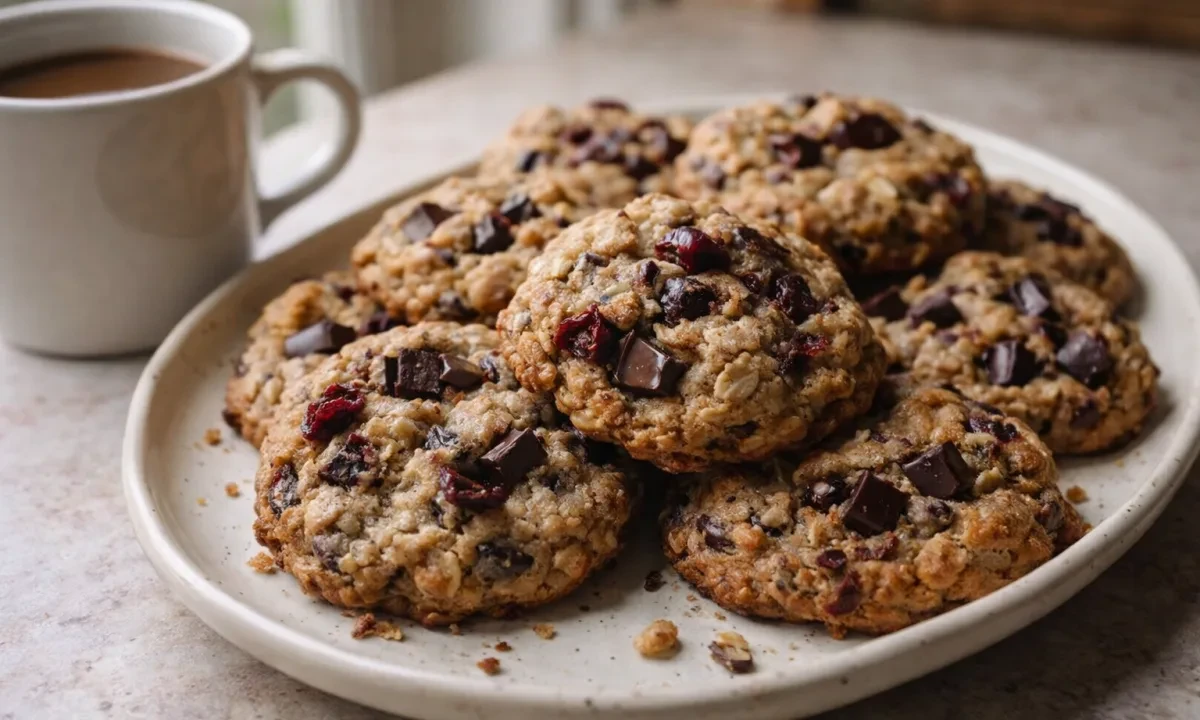
Big Fat Dark Chocolate Cranberry Oatmeal Cookies
Chewy oversized oatmeal cookies loaded with bittersweet dark chocolate, tart dried cranberries, and walnuts. The dough uses cake flour for tenderness and molasses for depth. A two-temperature baking method creates crispy edges and soft, chewy centers.
16
servings1
hour20
minutes15
minutesIngredients
2 cups (170g) old-fashioned whole rolled oats
1 1/2 cups (188g) all-purpose flour, spooned and leveled
1 cup (118g) cake flour, spooned and leveled
1 tsp cornstarch
3/4 tsp baking powder
1/2 tsp baking soda
1/2 tsp ground cinnamon
1/2 tsp salt
1 cup (226g) unsalted butter, softened to room temperature
1 cup (200g) packed light or dark brown sugar
1/2 cup (100g) granulated sugar
2 large eggs, at room temperature
1 tbsp (21g) unsulphured or dark molasses
1 tsp pure vanilla extract
6 oz (170g) chopped bittersweet or dark chocolate
1 cup (150g) dried cranberries
3/4 cup (90g) chopped walnuts
Directions
- In a large bowl, whisk together the oats, all-purpose flour, cake flour, cornstarch, baking powder, baking soda, cinnamon, and salt. Set aside.
- Using a handheld mixer or stand mixer fitted with a paddle attachment, beat the butter, brown sugar, and granulated sugar together on medium-high speed until creamy and combined, about 3 minutes.
- Add the eggs, molasses, and vanilla, and beat on high speed until combined, about 1 minute. Scrape down the sides and bottom of the bowl and beat again as needed.
- Add the flour mixture to the wet ingredients, plus the chopped chocolate, dried cranberries, and walnuts. Beat on low speed until combined. This is a thick, heavy, and sticky dough, so you may need to start and stop your mixer a couple of times.
- Cover and refrigerate the dough for at least 1 hour and up to 4 days. If chilling longer than 1 day, let the dough sit at room temperature for at least 30 minutes before scooping, as it will be very firm.
- Preheat the oven to 400°F (204°C). Line large baking sheets with parchment paper or silicone baking mats. Set aside.
- Use a 1/3-cup measuring cup to scoop the cookie dough, about 3 ounces (85g) each, and arrange 5 to 6 cookies on each baking sheet.
- Bake for 5 minutes; then, without opening the oven, reduce the temperature to 350°F (177°C) and bake for an additional 10 minutes.
- Remove the cookies from the oven and allow them to cool on the baking sheet for 10 to 20 minutes before transferring to a wire rack to cool completely.
Frequently Asked Questions
Can I use quick oats instead of old-fashioned rolled oats?
Quick oats are more finely cut and will break down more during mixing, resulting in a denser crumb. Old-fashioned rolled oats are recommended for their texture and structure. If you must use quick oats, reduce the amount slightly to 1 3/4 cups.
What if I don't have cake flour?
Substitute an additional 1 cup of all-purpose flour for the cake flour. The cookies will be slightly less tender, but still delicious. For a closer match, you can make a substitute by mixing 2 tablespoons of cornstarch with 14 tablespoons of all-purpose flour per cup needed.
Why does my dough feel too sticky to scoop?
If the dough is too warm or hasn’t chilled long enough, it will be difficult to portion. Always refrigerate for at least 1 hour. If chilled longer than 1 day, bring it to room temperature for 30 minutes before scooping.
Can I bake these cookies at a single temperature?
The two-temperature method is designed to set the edges while keeping the centers chewy. If you bake at 350°F (177°C) for the entire 15 minutes, the cookies will bake more evenly but may not have the same textural contrast. Stick with the recommended method for best results.
How do I know when the cookies are done baking?
The edges should be golden brown and set, while the very center still looks slightly soft or underbaked. The cookies will continue to cook on the hot baking sheet as they cool. Do not wait for the center to look fully baked, or the cookies will be hard.
Can I make the dough ahead of time?
Yes. The dough can be refrigerated for up to 4 days in an airtight container. You can also freeze portioned dough scoops for up to 3 months. Bake from frozen, adding 2 to 3 minutes to the total time.








Leave a Reply