

Creamy pesto pasta strikes that rare balance between restaurant-quality and weeknight-simple. The sauce comes together in minutes, yet tastes like you spent hours perfecting it. Fresh basil stays vibrant, heavy cream adds richness, and a generous handful of parmesan brings everything into focus. This is the kind of dish you’ll find yourself making again and again.
What Makes This Sauce So Silky
The magic happens when you combine three simple elements: a fresh basil mixture, warm cream, and melted parmesan. Unlike traditional pesto, which relies on nuts and relies on raw basil staying raw, this version softens the basil slightly and lets the cream carry all that herbaceous flavor throughout the pasta. The parmesan doesn’t just add taste—it emulsifies with the cream, creating a sauce that clings to each piece of farfalle rather than pooling at the bottom of the bowl.
Starting with finely minced basil (not a smooth puree) gives you texture and lets you see the herb throughout every bite. The water added to the food processor helps break down the basil gently without turning it into a dark paste.
Why Pasta Water Is Your Secret Weapon
Reserving pasta water before draining is one of those small moves that separates good pasta from great pasta. The starchy liquid thins the sauce to the exact consistency you want and helps it coat the noodles evenly. As the finished dish sits, it naturally thickens, so adding a splash or two of that reserved water keeps everything moving and prevents a gluey result. Start with a little and add more as needed.
Building Flavor Without Burning Garlic
Garlic is the bridge between the basil and the cream, but it needs careful handling. Sautéing it for just 20 to 30 seconds over medium-low heat releases its aroma without letting it brown or turn bitter. If your garlic browns, the whole sauce takes on a harsh, burnt edge that overpowers the fresh basil. Watch it closely—you want it fragrant and just barely starting to deepen in color, nothing more.
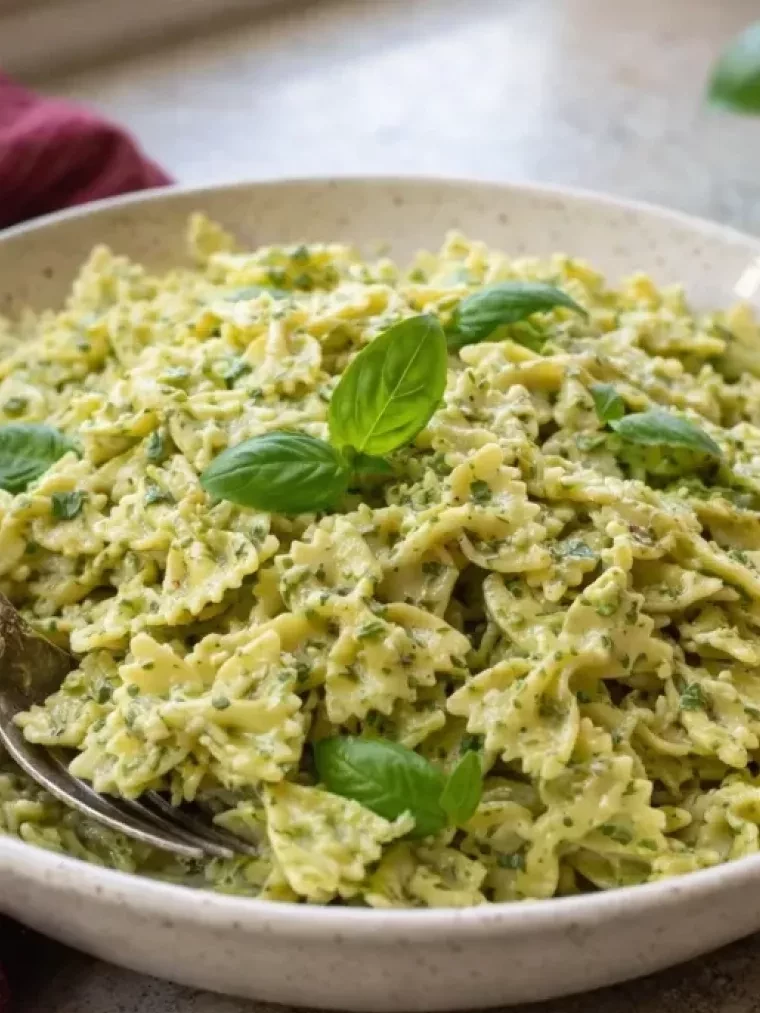
Choosing Your Pasta Shape
Mini farfalle works beautifully here because its bow-tie ridges trap the creamy sauce in every pocket. If you can’t find mini farfalle, regular farfalle works just as well—you may just need an extra minute or two of cooking time. Other short pasta shapes like penne, fusilli, or orecchiette also work if that’s what you have on hand. Avoid long pasta like spaghetti or fettuccine; the sauce won’t cling the same way.
Adjusting Creaminess to Your Taste
The base recipe uses 3/4 cup heavy cream, which creates a luxurious but not heavy sauce. If you prefer something richer, stir in the optional 1/4 cup more cream. If you want it lighter, skip the extra cream and use a bit more pasta water instead. There’s no wrong choice here—it’s about what tastes right to you. Keep in mind that the sauce thickens as it cools, so err on the side of slightly looser if you’re unsure.
Timing and Temperature Matter
Keep the heat low once the cream is in the pot. High heat can cause the cream to break or the parmesan to clump instead of melting smoothly. The pasta should finish cooking right around the time your sauce is ready, so you’re not waiting or rushing. Having everything prepped before the water boils—basil minced, garlic minced, cream measured—means you can move through each step without scrambling.
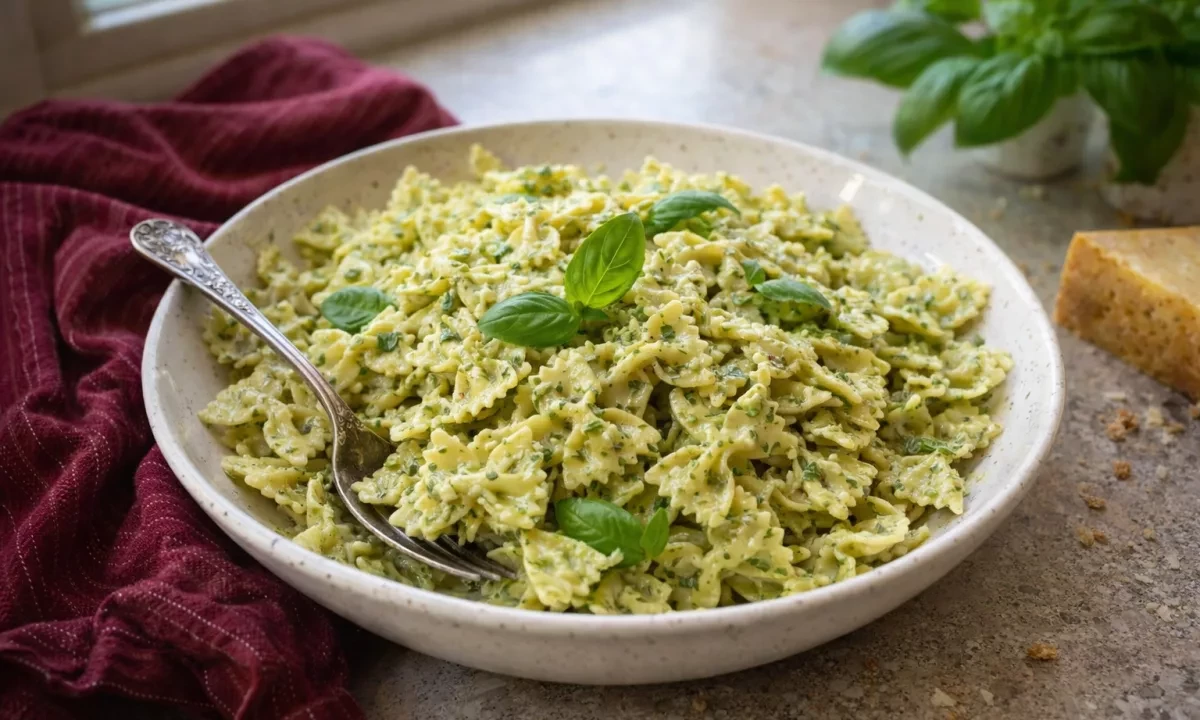
Creamy Pesto Pasta
A silky, fresh pasta dish made with vibrant basil, heavy cream, and parmesan that comes together in 30 minutes.
6
servings15
minutes15
minutesIngredients
2 1/2 cups packed fresh basil leaves
3 Tbsp extra virgin olive oil, divided
2 Tbsp water
12 oz. dry mini farfalle or regular farfalle pasta
Salt and black pepper
1 1/2 Tbsp minced garlic (about 4 cloves)
3/4 cup heavy cream, or 1/4 cup more for creamier pasta
2 oz. parmesan cheese, finely grated (about 1 cup)
Directions
- Add basil leaves to a food processor along with 2 Tbsp olive oil and 2 Tbsp water. Pulse until basil is very finely minced, stopping to scrape down the sides as needed. Transfer to a small airtight container and set aside.
- Bring 10 cups water to a boil in a large pot. Season generously with salt, add farfalle, and cook according to package directions. Reserve 1/2 cup pasta water, then drain the pasta.
- Return the empty pot to medium-low heat and add the remaining 1 Tbsp olive oil. Add minced garlic and sauté for 20 to 30 seconds until fragrant and just barely deepening in color, being careful not to brown it.
- Pour in the heavy cream and bring to a light simmer. Reduce heat to low, stir in the parmesan cheese, then add the drained pasta and basil mixture. Toss gently to coat everything evenly.
- Season with salt and pepper to taste. Thin with reserved pasta water as needed, adding a splash at a time. The sauce will thicken as it rests. Add the optional 1/4 cup extra cream if you prefer a richer dish.
Frequently Asked Questions
Can I make this recipe without a food processor?
Yes. Mince the basil as finely as you can by hand with a sharp knife. It may not be quite as fine, but the dish will still taste delicious. Avoid using a blender, as it tends to over-process herbs and can turn them dark.
What if I don't have fresh basil?
Fresh basil is really the heart of this dish, so it’s worth seeking out if possible. In a pinch, you can use fresh parsley mixed with a small amount of fresh mint, but the flavor will be noticeably different. Dried basil won’t work well here.
Can I use half-and-half instead of heavy cream?
Yes, though the sauce will be less rich. You may also need slightly less pasta water to reach the right consistency, since half-and-half is thinner than heavy cream.
How do I prevent the parmesan from clumping?
Grate it finely using a rasp grater or microplane, and make sure the heat is low when you stir it in. Add it slowly while stirring constantly so it melts smoothly rather than seizing up.
Can I make the basil mixture ahead of time?
Yes, you can prepare it up to a few hours in advance. Keep it in an airtight container in the refrigerator. The basil will darken slightly over time, but the flavor remains good. Bring it to room temperature before stirring it into the warm pasta.
Is this recipe gluten-free?
The recipe as written is not gluten-free because it uses regular pasta. You can easily make it gluten-free by using gluten-free farfalle or another gluten-free pasta shape. The sauce itself is naturally gluten-free.




Leave a Reply