

Mashed potatoes are a kitchen staple that deserves to be done well. The difference between lumpy, gluey mashed potatoes and silky, fluffy ones comes down to a few key choices: which potatoes you choose, how you cook them, and what you add to them. This recipe walks you through each step so you end up with mashed potatoes that are genuinely creamy and delicious, not overworked or bland.
Why Potato Selection Matters
Not all potatoes mash the same way. Russet potatoes are the traditional choice because they’re starchy and break down easily into a fluffy texture. Yukon Gold potatoes work well too and have a naturally buttery flavor. Avoid waxy potatoes like red or fingerling varieties, as they hold their shape and won’t give you that smooth consistency you’re after.
The Best Way to Cook Potatoes for Mashing
Cut your potatoes into even chunks, roughly 2 inches each. This helps them cook at the same rate. Place them in cold salted water and bring to a boil, then simmer until a fork easily pierces the largest piece, usually 15 to 20 minutes. Don’t skip the salt in the cooking water—it seasons the potatoes from the inside out. Once cooked, drain them well and let them steam in the pot for a minute or two to evaporate excess moisture.
Getting the Texture Just Right
Warm your butter and milk or cream before adding them to the hot potatoes. Cold dairy can cause the starches to seize up and become gluey. Use a ricer or food mill if you have one—these tools break down potatoes evenly without overworking them. If you use a masher, work gently and stop as soon as there are no large lumps. Overmixing develops gluten in the potatoes and turns them into glue.

The ratio of dairy to potatoes affects creaminess. Start with 4 tablespoons of butter and 1/2 cup of milk per 2 pounds of potatoes, then adjust based on your preference. Some people like theirs thicker; others prefer a looser consistency.
Seasoning for Maximum Flavor
Salt and white pepper are the classic seasonings, but don’t hold back. Taste as you go and season generously. Fresh cracked black pepper works too if that’s what you have. Garlic powder, a pinch of nutmeg, or fresh chives can add subtle depth without overwhelming the dish. Add seasonings after you’ve finished mashing so you don’t accidentally overwork the potatoes while stirring.
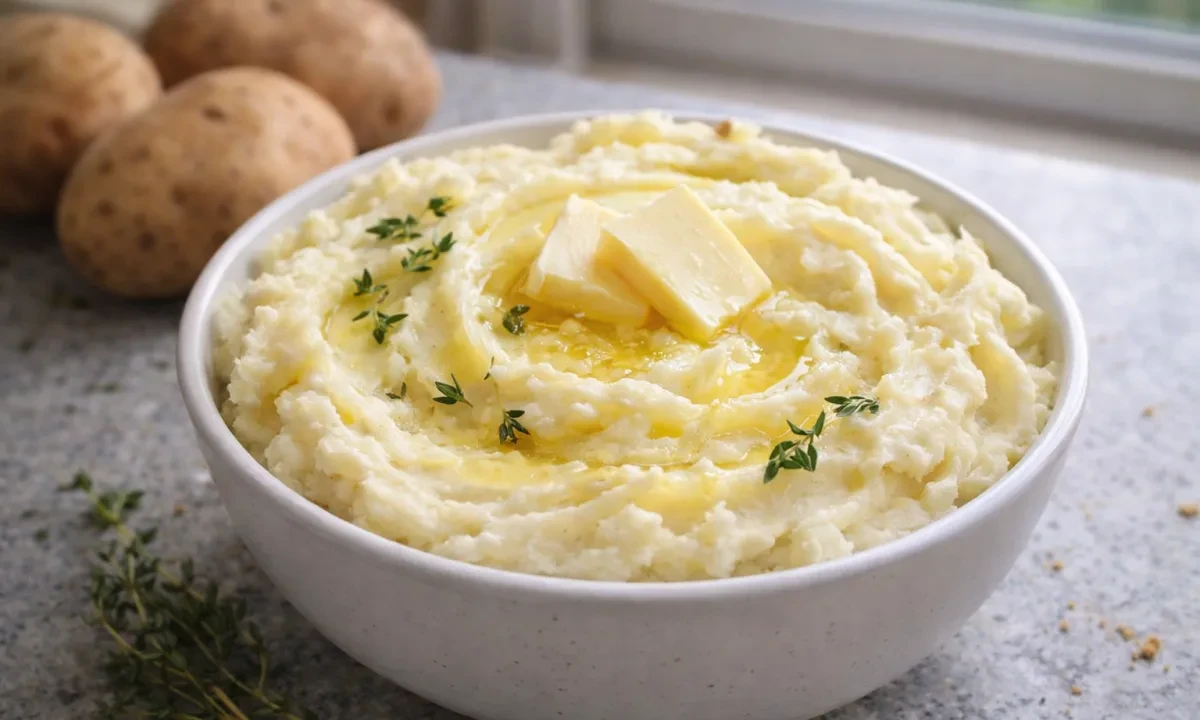
Creamy Mashed Potatoes
Silky, fluffy mashed potatoes made with simple ingredients and foolproof techniques. Perfect as a side dish for any meal.
4
servings15
minutes20
minutesIngredients
2 lb russet or Yukon Gold potatoes
4 tbsp butter
1/2 cup whole milk or heavy cream
Salt to taste
White pepper to taste
Directions
- Cut potatoes into 2-inch chunks and place in a large pot of cold salted water.
- Bring to a boil over high heat, then reduce to a simmer for 15 to 20 minutes until potatoes are very tender.
- Drain potatoes thoroughly in a colander and return to the pot.
- Let potatoes steam in the pot for 1 to 2 minutes to remove excess moisture.
- Warm butter and milk together in a small saucepan or microwave.
- Pass potatoes through a ricer or food mill into a bowl, or mash gently with a potato masher.
- Fold in warm butter and milk until combined, stirring gently until creamy.
- Season with salt and white pepper to taste and serve immediately.
Frequently Asked Questions
Can I make mashed potatoes ahead of time?
Yes, you can prepare them up to 2 hours ahead and keep them warm in a covered pot on low heat, stirring occasionally. For longer storage, refrigerate in an airtight container and reheat gently before serving.
Why are my mashed potatoes gluey?
Gluey texture usually comes from overworking the potatoes with a blender or food processor, or from using a ricer or masher too aggressively. Using cold milk or butter can also cause this. Stick to gentle mashing and warm dairy for the best result.
Can I use red potatoes instead of russet?
Red potatoes are waxy and won’t break down as smoothly, resulting in a chunkier texture. For the creamiest mashed potatoes, stick with russet or Yukon Gold varieties.
What's the difference between using milk and cream?
Cream makes richer, more luxurious mashed potatoes, while milk keeps them lighter. Half-and-half is a good middle ground. Start with milk and switch to cream if you prefer a more indulgent version.
How do I fix mashed potatoes that turned out too thick?
Warm some milk or cream and stir it in gradually until you reach the desired consistency. Do this gently to avoid overworking the potatoes.







Leave a Reply