
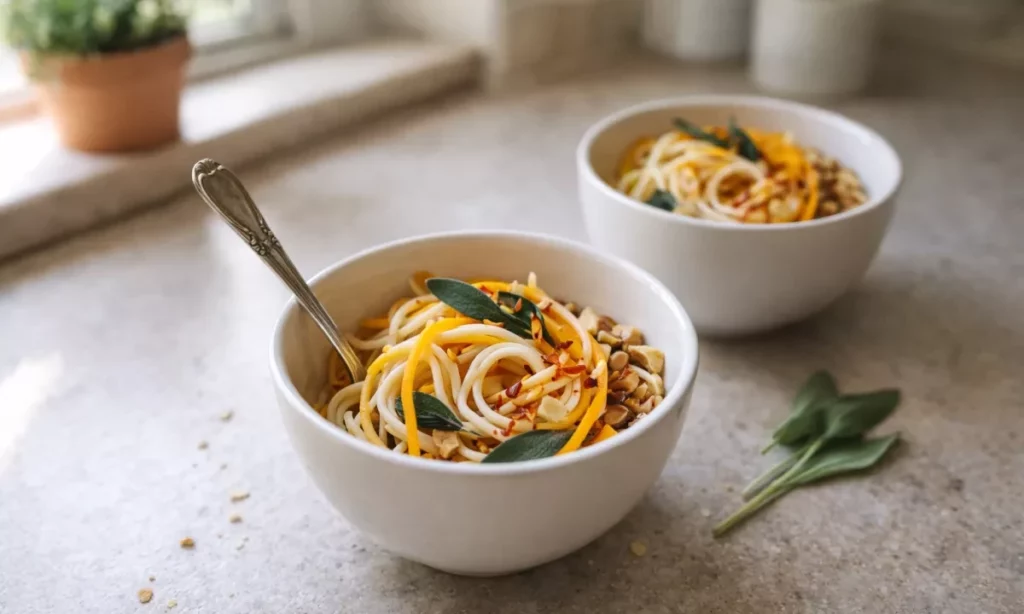
Butternut squash transforms into a silky sauce when roasted and tossed with pasta, creating a dish that feels special without demanding hours in the kitchen. The natural sweetness of the squash pairs beautifully with crispy sage and garlic, while the noodles soak up every bit of flavor. This recipe delivers comfort food that works for weeknight dinners and weekend gatherings alike.
Why This Sauce Works Without Cream
Unlike traditional pasta sauces that rely on heavy cream, butternut squash becomes naturally creamy when roasted and blended. The starches in the squash create a velvety texture that coats the noodles evenly. A splash of pasta water helps loosen the sauce to the right consistency, while a touch of butter adds richness. This method keeps the dish lighter than cream-based alternatives while delivering the same satisfying mouthfeel.
The key is roasting the squash until it’s completely tender, which concentrates its flavor and makes it easier to blend into a smooth sauce. Undercooked squash will result in a lumpy, thin sauce that won’t cling to the pasta properly.
Building Layers of Flavor
Sage and garlic are the supporting players that make this dish memorable. Crispy sage leaves add an earthy, slightly peppery note that cuts through the squash’s sweetness, while roasted garlic mellows into a subtle backbone. Toast the sage in butter until it’s fragrant and the leaves begin to curl, which intensifies its flavor without making it bitter.
A pinch of nutmeg in the sauce echoes the warmth already present in butternut squash, tying the flavors together. Don’t skip it, even if you use just a quarter teaspoon—it makes a noticeable difference.
Achieving the Right Pasta Consistency
The sauce should flow loosely enough to coat each strand without pooling at the bottom of the bowl. Start with a quarter cup of pasta water and add more a tablespoon at a time until you reach the texture you want. The starch in the cooking water helps the sauce adhere to the noodles and continues to thicken slightly as it sits.
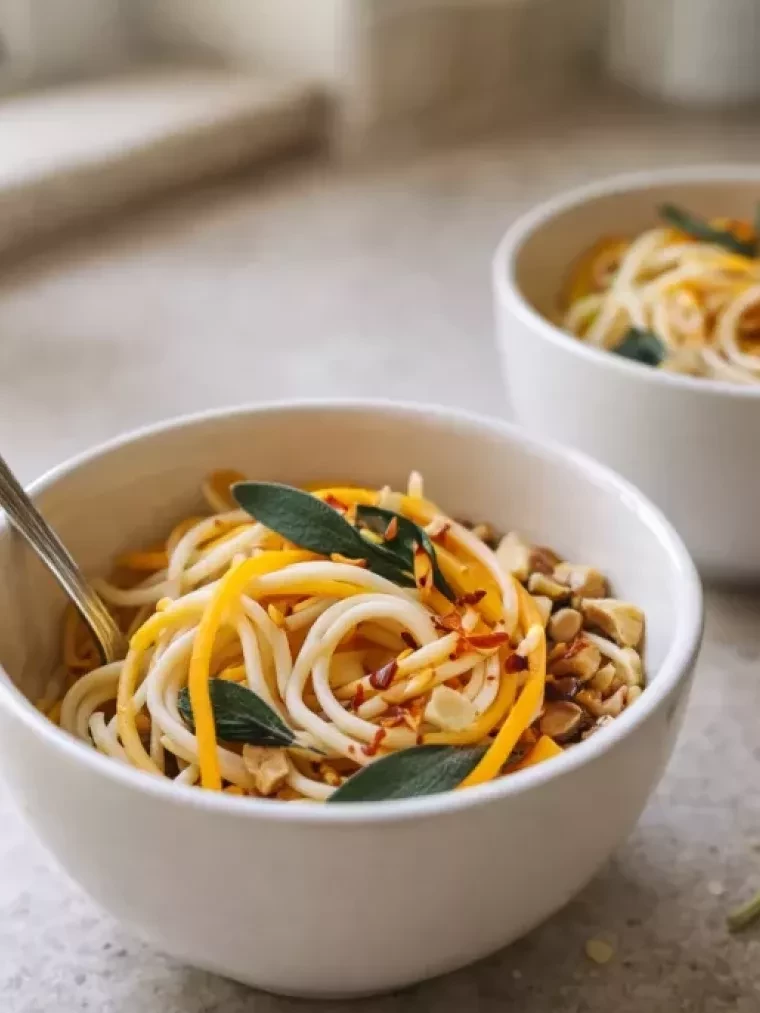
Reserve pasta water before draining, and add it gradually rather than all at once. You can always add more, but you cannot remove excess liquid once it’s mixed in. Toss the pasta with the sauce immediately after combining—letting them sit separately will cause the noodles to absorb moisture and dry out.
Timing and Temperature
Roasting the squash takes about 25 to 30 minutes at 400°F, depending on how you cut it. Smaller pieces cook faster and more evenly than large chunks. While the squash roasts, you can bring water to a boil, prepare your sage and garlic, and set out your other ingredients.
The entire dish comes together in roughly 40 minutes from start to finish, making it realistic for a weeknight. If you’re short on time, you can roast the squash ahead and store it in the refrigerator for up to three days, then blend and warm it when you’re ready to cook the pasta.
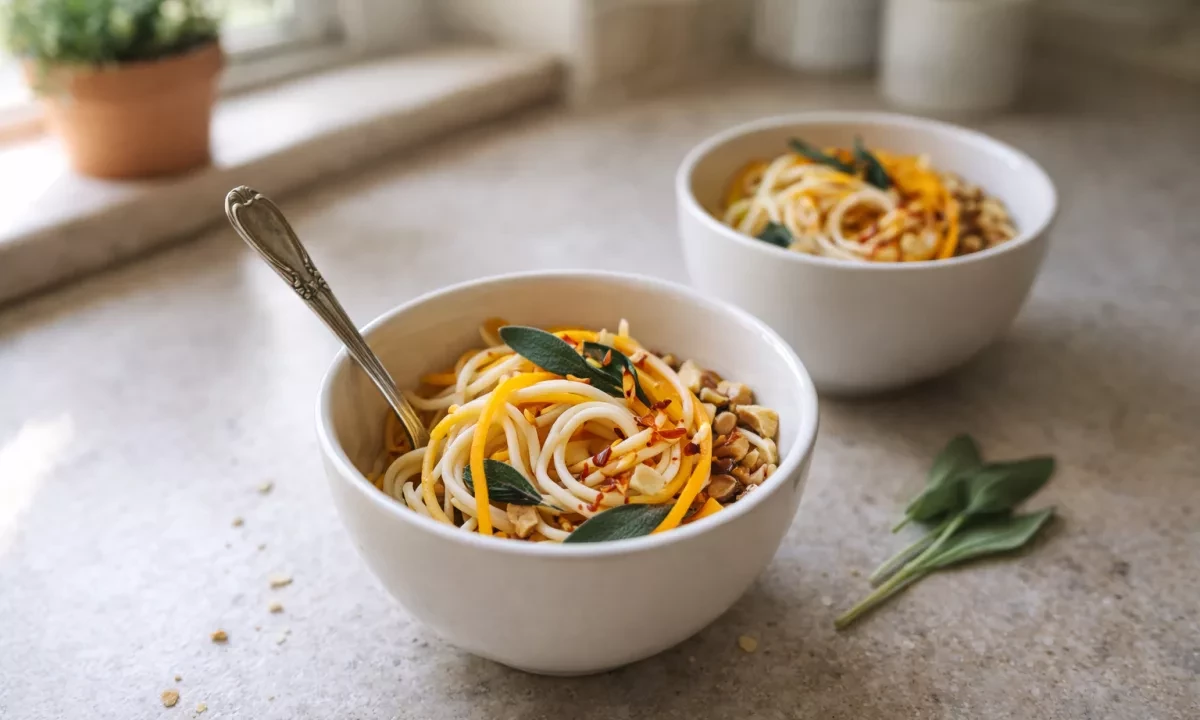
Butternut Squash Noodle Pasta
A naturally creamy pasta dish featuring roasted butternut squash, crispy sage, and roasted garlic. Ready in about 40 minutes and serves 4.
4
servings15
minutes30
minutesIngredients
1 butternut squash, about 2 pounds, peeled, seeded, and cut into 1-inch cubes
3 tbsp olive oil
Salt and black pepper to taste
1 lb pasta, such as pappardelle or fettuccine
4 tbsp butter
8 cloves garlic, minced
12 fresh sage leaves
1/4 tsp nutmeg
1/4 cup pasta water, plus more as needed
1/4 cup grated Parmesan cheese
Zest of 1 lemon
Directions
- Preheat the oven to 400°F. Toss the butternut squash cubes with 2 tablespoons of olive oil, salt, and pepper on a baking sheet. Spread in a single layer and roast for 25 to 30 minutes, stirring halfway through, until the squash is very tender and beginning to caramelize.
- Bring a large pot of salted water to a boil. Add the pasta and cook according to package directions until al dente. Reserve 1 cup of pasta water before draining.
- While the pasta cooks, melt the butter in a large skillet over medium heat. Add the minced garlic and cook for 1 minute until fragrant, then add the sage leaves. Cook for another minute until the sage is crispy.
- Transfer the roasted squash to the skillet with the garlic and sage. Add the nutmeg and stir to combine. Using a wooden spoon or immersion blender, break down the squash into a chunky or smooth sauce, depending on your preference. Add 1/4 cup of pasta water and stir until the sauce reaches a pourable consistency.
- Add the cooked pasta to the skillet with the sauce. Toss well, adding more pasta water a tablespoon at a time if the sauce seems too thick. Divide into serving bowls and top with Parmesan cheese and lemon zest.
Frequently Asked Questions
Can I make this recipe ahead of time?
Yes. You can roast the squash up to 3 days in advance and store it in the refrigerator. Blend it with the garlic and sage when you’re ready to cook the pasta. The complete dish keeps in the refrigerator for 3 days, though it’s best eaten within 1 day for the best texture.
What pasta shape works best?
Wide, flat noodles like pappardelle, fettuccine, or tagliatelle work wonderfully because the sauce clings to them easily. You can also use rigatoni or shells if you prefer. Avoid very thin pasta like angel hair, which can get lost in the sauce.
Is this recipe vegan?
To make it vegan, replace the butter with olive oil and skip the Parmesan cheese, or use a plant-based Parmesan alternative. The sauce will be slightly less rich but still delicious.
Can I use frozen butternut squash?
Frozen squash works in a pinch, though fresh roasted squash has better flavor and texture. If using frozen, thaw it first and pat it dry to remove excess moisture. You may need slightly less pasta water since frozen squash releases more liquid.
What if my sauce is too thick?
Add pasta water 1 tablespoon at a time while stirring until you reach the desired consistency. The sauce should be loose enough to flow around the noodles but thick enough to coat them lightly.
Can I make this without an immersion blender?
Yes. Mash the roasted squash with the back of a wooden spoon until it reaches your preferred texture, or transfer it to a food processor to blend. You don’t need a completely smooth sauce—a slightly chunky texture is equally appealing.



Leave a Reply